Most bettors think they understand how spread betting works, but they’re making the same costly mistake. The spread isn’t what you think it is—and that misunderstanding is exactly what sportsbooks count on.

Your team wins by 6 points. You lose your bet anyway. That’s spread betting in a nutshell—where victory tastes like defeat and logic takes a holiday. The confusion isn’t accidental. It’s engineered.
Nobody mentions this when they explain “how does spread betting work?”: That number beside your team’s name? It’s not a forecast. Not a prophecy. Barely even a suggestion of what’ll happen on the field. Yet millions treat it like gospel, then wonder why their bankroll vanishes faster than free beer at a Super Bowl party.
The spread dominates American sports betting. It’s built on a gorgeous lie that keeps casual bettors confused yet confident—a profitable combo for sportsbooks. According to research from the American Gaming Association, spread betting accounts for roughly 40% of all NFL wagers. Most bettors still can’t explain why the Kansas City Chiefs at -7.5 means something fundamentally different than what they believe.
Here’s the blunt truth: if you read the spread as “this is how much Team A will win by,” you’ve already lost. You’re not alone, though. That misunderstanding runs so deep that it has become the foundation of how sportsbooks profit every Sunday.
The Spread Is Not a Prediction — It’s a Psychological Price
You see Patriots -3.5 versus Dolphins +3.5. Your brain instantly translates: “experts think the Patriots will win by about 4 points.”
Wrong. Spectacularly wrong.
The spread splits public opinion in half. It’s not ESPN’s analytics department making a call. It’s a number carefully engineered to make half the betting public think “yeah, Patriots can definitely cover that” while the other half thinks “nah, that’s too many points.”
Picture this scenario. A sportsbook posts the Lakers -15 against the Wizards. Everyone on Earth knows the Lakers will win by exactly 20. What happens? Everyone hammers Lakers -15 until the book goes bankrupt. That’s precisely why sportsbooks don’t post predictions—they post prices that create uncertainty.

How Does Spread Betting Work Behind the Scenes?
The opening line comes from professional oddsmakers analyzing team statistics, weather conditions, and countless variables. Then the number moves based on where money flows. Sharp bettors pound one side? The spread shifts. Casual money floods the opposite direction? It shifts again.
The spread breathes. Reacts. Evolves.
Stanford’s study on sports betting markets found that NFL spreads accurately predict the actual margin within 3 points only 45% of the time. True predictions would hit much higher. Instead, it’s optimized for something else entirely: creating equal action on both sides so the sportsbook collects juice regardless of outcome.
Understanding spread betting, explained simply through this lens changes everything. You stop asking “will they win by this much?” You start asking, “is this number creating value on either side?”
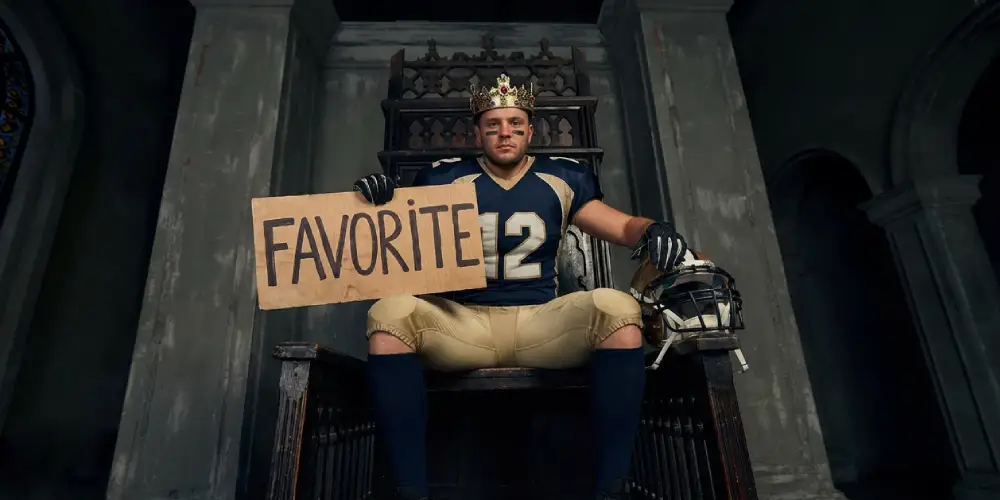
Why Favorites Feel Safer Than They Really Are
Human brains crave pattern recognition. We see the Cowboys dominating headlines and assume Cowboys -6.5 is “practically free money.” This explains exactly why bettors misunderstand the point spread so catastrophically.
Favorites cover the spread less than 50% of the time in most major sports leagues. Let that marinate. The team expected to win—the one you’re laying points on—fails to beat the spread more often than not. Yet betting volume on favorites consistently outpaces underdogs, according to data tracked by Sports Insights.
Why? Favorites win games outright about 66% of the time. This creates an illusion of reliability. Your brain conflates “winning the game” with “covering the spread.” These are fundamentally different outcomes. The difference between winning and covering the spread is the gap where most bettors hemorrhage money.
The Bills Trap: When Dominance Doesn’t Equal Covering
The Bills play the Jets. Buffalo’s the better team—everyone knows this. The spread opens at Bills -10.
Buffalo might win 90% of the time. But can they win by 11 or more? That’s a completely different question. Maybe they win 27-20. You lose. Maybe they win 31-24. You still lose. Maybe they win 35-17 and you finally cash.
Three different versions of Buffalo dominance. Only one makes you money.
This explains why spread betting feels 50/50 but isn’t. Sportsbooks have conditioned the public to see favorites as “safe” while quietly knowing that covering double-digit spreads is a brutal statistical grind. Sure, check our AI betting predictions for data-driven edges. Just remember: even artificial intelligence can’t overcome human psychology baked into line movement.
My Personal Lesson: The Eagles Disaster
The 2022 NFL season taught me this lesson the expensive way. I convinced myself the Eagles at -7.5 against the Commanders was “lock of the century.” Philadelphia was steamrolling everyone. Washington was struggling. The narrative was perfect.
Eagles won 24-8. I lost.
Sixteen points felt like a blowout watching the game. My bet needed 17. That single point—the difference between a comfortable win and covering the spread—cost me three units. The worst part? I made the same mistake two weeks later with the Bills laying 10 at home. Absolutely certain “this time” would be different.
It wasn’t.
That’s when I started tracking something revealing. I went back through my betting history and discovered I was hitting 58% on underdogs but only 41% on favorites. The pattern became obvious. I was chronically overestimating how much better the superior team actually was. Highlight reels and power rankings seduced me. The market was setting traps with inflated favorite lines. I was walking into them with my wallet wide open.
Once I recognized this bias in myself? My approach completely changed. Now, when I see a big favorite, my first instinct is skepticism—not excitement.
The Illusion of “Fair Odds” in Spread Betting
Here’s where it gets deliciously twisted. Most bettors think spread betting offers “fair odds” because both sides are listed at -110. You pick a team. You lay the same juice as the other guy. Seems balanced, right?
Except it’s not.
The spread itself isn’t neutral—it’s a manufactured equilibrium point designed to extract maximum value from public bias. What does covering the spread really mean? It means you correctly identified which side of an artificially created price had positive expected value. That’s it. Nothing fair about it.
How Public Money Affects the Spread
When the public hammers one side of a spread, the line moves. Not because the sportsbook’s prediction changed. Because they need to balance their liability. If 70% of bets land on the Lakers -8, the book might move it to -9 or -9.5.
They’re not saying “we now think the Lakers will win by more.” They’re saying, “we need some money on the other side, or we’re exposed.”
This creates opportunities for sharp bettors. When you see a line move against public sentiment—say, 75% of bets on Team A, but the line moves toward Team B—that’s a signal. Professional money is pouring in heavily on the other side. The book respects it more than a casual volume.
Common mistakes in spread betting almost always trace back to treating -110 odds as if they represent equal probability. They don’t. One side usually has better value. Finding it requires understanding what the spread actually represents: a marketplace balancing mechanism, not a scorecard prediction.
Want to know where to place these bets? Check out the best online sportsbooks that offer competitive lines and quick payouts—though they all use the same psychological tricks against you.
Why Sportsbooks Don’t Need to Predict Scores
This might break your brain. Sportsbooks don’t care about predicting the final score. They care about balancing their books and collecting vigorish.
Do sportsbooks predict scores with the spread? Not really. They predict human behavior. They know casual bettors will overreact to last week’s blowout. They know primetime games attract public money on popular teams. They know underdogs beat the spread so often because recreational bettors chronically overvalue favorites.

The Wisdom of Crowds (And Their Biases)
According to research published in the Journal of Prediction Markets, betting market efficiency is driven more by collective bettor wisdom (and bias) than by bookmaker expertise. The crowd sets the line through their actions. Sportsbooks just facilitate and adjust.
Think about how sportsbooks set the spread. The opening number comes from experienced oddsmakers, sure. But it’s intentionally set to provoke a reaction. It’s a starting point for price discovery—not a final answer.
Then the market takes over. Sharp money, public money, injuries, weather, media narratives—all of it swirls together to create the closing line.
Why Does the Spread Move Before a Game?
New information changes the balance of perceived value. A star player gets ruled out. A weather report shows 40mph winds. A rumor surfaces that the coach is on the hot seat.
Each piece moves the needle. Not because it changes the likely outcome. Because it changes how bettors perceive value.
Here’s the kicker: sportsbooks win even when they’re “wrong.” As long as they’ve got roughly equal action on both sides, they collect the 10% juice from the losing side. That’s the business model. They’re not fortune tellers—they’re sophisticated market makers.
If you’re serious about finding edges, consider exploring the best sports betting payment methods to ensure you can move money efficiently when opportunities arise. In this game, timing matters.
Common Spread Mistakes Caused by Human Bias
Let’s catalog the mental traps that keep bettors broke. These aren’t just theoretical errors—they’re the specific cognitive failures that drain bankrolls every weekend across every sport.
Recency bias tops the list. Your team covered last week, so you assume they’ll do it again. Point spread myths explained: past performance has almost zero predictive power for covering spreads. Teams that covered three straight games still hover around 50% to cover the fourth.
Narrative seduction gets everyone. The media hypes a revenge game or a statement matchup. Suddenly, you’re convinced Team A will “show up motivated” and crush the spread. Motivation is real. But it’s already baked into the line by the time you’re reading Twitter hype threads.
Anchoring Errors and Line Movement Ignorance
Anchoring on the wrong number happens constantly. Bettors see a team favored by 7 and think “they’re way better, 7 points is nothing.” But is spread betting fair when you’re comparing teams with a 7-point talent gap? Maybe. Is it fair when public perception has inflated that gap from 4.5 to 7 because everyone saw the same highlight reel? Now you’re getting robbed.
Ignoring line movement proves costly. Why does the spread change after opening? Because smart money is moving it. If you’re betting the opening line without understanding why it moved, you’re donating to sharps who already identified value and grabbed the better number.
Win/Cover Confusion and Other Pitfalls
Confusing winning with covering explains why teams win but don’t cover the spread all the time. A 10-point favorite winning by 7 is still a loss for you. The scoreboard and your bet slip live in different universes.
Chasing steam without understanding it creates problems. You see a line move from -3 to -4.5 and jump on it. You assume smart money knows something. Sometimes they do. Other times, it’s just public overreaction to a news headline that’s already irrelevant.
Overvaluing home-field advantage is sneaky. The standard 3-point home adjustment is already built into every spread. When you factor it in again mentally, you’re double-counting. The Broncos getting 6 at home versus 9 on the road doesn’t mean the home line offers “better value”—the market already knows they play better in Denver.
Can you win long-term betting the spread? Yes. But only if you stop making these mistakes. It requires discipline, line shopping, bankroll management, and—most importantly—understanding that you’re not betting on who wins. You’re betting on whether the market has mispriced the margin.
For those chasing extra bankroll, grab the latest online betting bonuses to maximize your edge. Just don’t let free money trick you into bad bets.
How Understanding Bias Changes the Way You Read the Spread
Once you see the spread as a psychological construct rather than a prediction, you start reading the board differently. You stop asking “how does spread betting work mechanically?” You start asking, “What’s the market telling me about perception versus reality?”
When you see a line that seems “too good to be true,” your first question should be: What do I know that the market doesn’t? Usually, the answer is nothing. The market knows about the injury. The market knows about the weather. The market knows about the coaching matchup.
If the spread looks fishy? It’s probably a trap.

Spread vs Moneyline: Reading Market Sentiment
Spread betting versus moneyline explained: the moneyline asks “who wins?” The spread asks “by how much?” Casual bettors treat both as prediction markets. Smart bettors treat both as sentiment gauges.
When the spread and moneyline diverge in odd ways—say, a massive spread with a surprisingly low moneyline price—that’s information. It tells you the market expects a close game with the favorite likely to win, but not by much.
Why betting the spread is harder than it looks: because you’re competing against a collective market intelligence that’s faster, sharper, and less emotional than you. You’re also fighting the juice on every bet. To profit, you need a 52.4% win rate just to break even at -110 odds. That’s a thin margin for error when you’re battling inherent biases.
Asking the Right Questions
How to read a betting spread correctly? Start by asking why the number is what it is. What’s the public leaning toward? Where are the sharps betting? Has the line moved? If so, in which direction relative to betting percentages?
These questions reveal far more than memorizing what -7.5 means.
Understanding spread betting, explained for beginners without jargon means stripping away the mystique. The spread is a marketplace price. Team A at -6 means the sportsbook believes setting the line there will create roughly equal betting interest on both sides. It’s not saying Team A is 6 points better. It’s saying “at this price, we think bettors will split their opinions.”
The Oddsmaker’s Real Job
How bookmakers decide the point spread blends art and science. The opening number comes from models and expert judgment. The closing number comes from the market. Your job? Find the gap between those two and exploit it before it disappears.
Simple explanation of point spread betting: you’re wagering on whether the final adjusted score (actual score plus/minus the spread) favors your side. Patriots -7 means they must win by 8 or more. Dolphins +7 means they must either win outright or lose by 6 or less.
The middle ground—Patriots winning by exactly 7—results in a push where everyone gets their money back.
Reality Check: Theory Meets the Field
Why sportsbooks adjust the spread isn’t mysterious once you understand their motivation. They’re not trying to be right about the game. They’re trying to be right about bettor behavior. If too much money flows in one direction, they adjust the price to make the other side more attractive.
It’s supply and demand—not prophecy.
How spread betting works in real games is where theory meets cruel reality. You watch your team dominate for three quarters. Up by 14 with 8 minutes left. You’re already counting your winnings.
Then they go conservative. The opponent scores two garbage-time touchdowns. Your “lock” loses by the hook.
This scenario plays out every single weekend across every sport. The spread doesn’t care about the narrative of the game. It only cares about the final margin.
What sportsbooks mean by the spread is fundamentally different from what bettors want it to mean. Bettors want certainty disguised as a number. Sportsbooks offer uncertainty priced to extract maximum value from human cognitive bias.
The sooner you accept this gap? The sooner you stop bleeding money on “sure things.”
Is the spread a prediction or odds? It’s neither, but also both. It’s a prediction of market equilibrium masquerading as a prediction of game outcome. The odds (-110 on each side) are the sportsbook’s tax for facilitating the bet. Everything else is theater.