
AI betting models combine Poisson wizardry, xG sorcery, and ELO alchemy to outsmart bookmakers—but which magical system actually prints money, and can these robots really save you from your own terrible betting decisions?

Let’s be brutally honest here: your “feeling” about tonight’s match is worth about as much as a £5 accumulator at a charity casino. Sure, you’ve watched football since you were knee-high to a grasshopper, you reckon you can spot when Manchester United “just looks shaky,” and you’re absolutely convinced you’ve developed a sixth sense for upsets. Spoiler alert: you haven’t.
Intuition-based betting fails long-term with the inevitability of your mate Dave promising he’ll “definitely pay you back next week.” It’s not a question of if you’ll lose money—it’s a question of how spectacularly you’ll lose it while convincing yourself you were “so close” to cracking the code.
Now, bookmakers aren’t sitting in smoke-filled rooms consulting fortune tellers either (though that would be brilliant). They’re deploying armies of mathematicians, statisticians, and probably a few wizards to build sophisticated models that ensure you lose more often than a politician’s promises survive contact with reality. The house edge isn’t accidental—it’s engineered with more precision than a Swiss watchmaker on Adderall.
So what’s a punter to do? Simple: fight fire with fire, math with math, robots with robots. Enter AI betting models.
Modern artificial intelligence doesn’t rely on one statistical party trick—it combines multiple models like Poisson distribution, expected goals (xG), and ELO ratings to create predictions that are exponentially more accurate than your uncle’s “system” that involves betting on teams whose managers have beards. If betting on gut feelings is bringing a butter knife to a gunfight, using one model is bringing a pistol, but using AI that combines multiple models? That’s rolling up with a tactical nuke and a very smug expression.
This is the exact foundation of BetwGPT’s AI predictions—we don’t just chuck statistical darts at a mathematical dartboard while blindfolded. We use machine learning to intelligently weight and combine different models based on what actually works for each league, market type, and match situation. It’s like having three expert analysts in your corner, plus a super-genius who knows exactly when to listen to which one.
Ready to understand how the professionals actually beat bookmakers? Buckle up, because we’re about to get nerdy (but in a fun way, promise).
What Is an AI Betting Model? (Without the Boring Bits)
Before we dive into the sexy stuff about Poisson distributions and xG metrics that’ll make you sound incredibly smart at dinner parties, let’s clear up what we actually mean by “AI betting models.” Because here’s what 99% of people get catastrophically wrong: they think there’s one magic formula that predicts match results like some sort of footballing crystal ball. Narrator: there isn’t.
There are three main flavors of betting models, and yes, they all have different jobs:
Statistical models use historical data and probability theory to predict outcomes. Think Poisson distribution for goals or regression analysis for match results. They’re mathematically bulletproof but can be about as flexible as your gran’s opinions on modern music—solid, reliable, but occasionally completely missing the point.
Machine learning betting models are the cool kids who actually went to university and learned critical thinking. They don’t just mindlessly follow predetermined formulas—they learn patterns from absolutely massive datasets and adjust their predictions based on what actually happens. They’re like statistical models that evolved consciousness and stopped taking everything so literally.
Hybrid AI systems (like what we use at BetwGPT) are what happens when you put statistical reliability and machine learning creativity in a room together and lock the door until they figure out their differences. We take the mathematical rigor of classical models and supercharge them with AI’s pattern-recognition superpowers. It’s like having both a meticulous accountant and a creative genius collaborating on your betting strategy instead of arguing about whose approach is “better.”

Hybrid Method Has Proven to be the Most Efficient One
Here’s the crucial bit that’ll save you thousands: no single model is enough. Ever. Period. End of discussion. Relying only on Poisson? You’ll miss absolutely crucial context about team performance, tactics, and momentum. Using only xG? You might overweight recent form and completely underestimate historical strength patterns. ELO ratings alone? You’re essentially ignoring tactical matchups, playing styles, and the million little details that make football beautiful chaos.
The genuine magic happens when AI betting models intelligently combine these approaches, dynamically adjusting each model’s contribution based on the specific situation. A heavyweight Premier League clash might need more ELO weighting because historical strength matters. A lower-league fixture with patchy data might lean harder on Poisson fundamentals because sometimes simple math is your best friend.
But perhaps most critically, AI reduces bias and emotion—the two biggest profit-assassins in sports betting. Your brain desperately wants to bet on your beloved childhood team even when they’re playing like a Sunday league side after a heavy night. AI doesn’t give a flying toss about your emotional attachments, your lucky shirts, or the fact that you “just have a feeling” about this one. It only cares about finding mathematical value. Cold? Maybe. Profitable? Absolutely.
The Poisson Model Explained (Goals-Based Prediction)
What Is the Poisson Distribution?
Right, let’s talk about the absolute granddaddy of football betting models—Poisson distribution. Don’t let the pretentious French name intimidate you (it’s named after mathematician Siméon Denis Poisson, in case that ever comes up at a pub quiz and you want to look insufferably clever). The concept is actually beautifully, elegantly simple.
The Poisson model betting approach predicts how often an event occurs within a fixed time period. In football terms, that “event” is a goal, and the “time period” is 90 minutes of grown adults chasing a ball around while millions of people watch and shout. Poisson discovered that certain random events follow weirdly predictable patterns when you examine large enough samples—like how many goals a team hammers in per match over a full season.
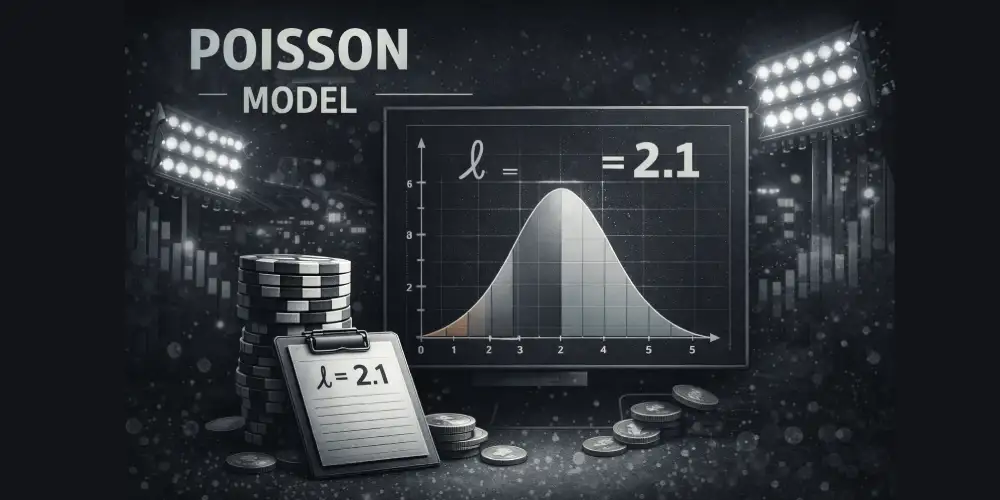
Why does this fit football goals like a glove? Because goals are relatively rare events (unlike basketball scoring or tennis points where someone scores every three seconds), and they’re somewhat independent of each other. Mathematically speaking, scoring one goal doesn’t dramatically alter the probability of scoring a second one—though tell that to any team that’s ever scored first and immediately sat back to defend their lead like they’re protecting the Crown Jewels.
Now for the assumptions. Poisson distribution football betting assumes that: goals occur at a relatively constant average rate; each goal is independent of previous goals; and two goals can’t happen at precisely the same millisecond. Of course, actual football is messier than any maths textbook dares to imagine. Teams don’t score at metronomic constant rates (we’re looking at you, 85th-minute-collapse specialists). Goals aren’t truly independent—score first and you might park the bus, or you might smell blood and go hunting for more.
But here’s the genuinely surprising thing: the model works remarkably well despite these real-world complications. It’s like how economic models assume humans are rational actors when we all know Dave from accounting once bought a boat despite living 100 miles from water. The model doesn’t need perfect assumptions—just good enough ones.
How Poisson Is Used in Football Betting
So how do bookmakers—and smart bettors who’ve done their homework—actually weaponize Poisson model betting in the real world? Let’s get delightfully practical.
The model absolutely excels at predicting:
Correct score markets: This is where Poisson transforms from useful tool into genuine superpower. If Team A averages 1.8 goals per home match and Team B concedes an average of 1.2 goals away, you can calculate precise probabilities for different scorelines with beautiful mathematical certainty. A 2-1 result might clock in at 12% probability, which you can immediately compare against bookmaker odds to spot genuine value hiding in plain sight.
Over/Under goals: Wondering if tonight’s match will soar past 2.5 goals or stay stubbornly boring? Poisson has opinions. By calculating the probability distribution of total goals, you can determine whether bookmakers are criminally overvaluing the Over or tragically underpricing the Under. It’s like having X-ray vision for goal totals markets.
Both Teams to Score: By calculating each team’s probability of blanking (scoring exactly zero) and combining them with some statistical wizardry, you get surprisingly solid estimates for BTTS markets. It’s particularly useful for identifying matches where one team is heavily defensive, but the bookies haven’t properly adjusted the BTTS odds because they’re still pricing based on narrative rather than numbers.
Here’s a simple example that won’t require you to dust off your old school calculator: Say Manchester City averages 2.0 goals per home game and Brentford concedes 1.5 away. Using Poisson magic, you might discover that City scoring exactly 2 goals has roughly 27% probability. If bookmakers are generously offering 4/1 odds (implying only 20% probability) on City to win 2-1, congratulations—you’ve just found mathematical value. Assuming Brentford’s attacking numbers align, obviously. Always check both ends.
Why do bookmakers still religiously rely on Poisson despite having supercomputers and PhD mathematicians? Because it’s lightning fast, remarkably reliable for large markets, and has decades of proven accuracy backing it up. It’s the Toyota Corolla of betting models—nobody writes songs about it, but it reliably gets you where you need to go without drama.
Poisson Model Strengths & Weaknesses
Pros:
The Poisson model is gorgeously simple and faster than a caffeinated sprinter. You don’t need a NASA-grade supercomputer—a decent spreadsheet, some season averages, and basic multiplication skills will absolutely do. This blessed simplicity means you can analyze hundreds of matches quicker than your mate can explain his accumulator that “definitely would’ve won if not for that one dodgy referee decision.” Perfect for scanning multiple leagues hunting for value.
It’s also genuinely brilliant for totals and scorelines. When you’re punting on Over/Under 2.5 goals or throwing darts at correct scores, Poisson gives you proper mathematical foundations rather than vibes and hopium. Research from Football-Data.co.uk shows Poisson-based predictions align with actual scoreline frequencies surprisingly well across major European leagues—it’s not guessing, it’s calculated probability.
Cons:
Here’s where reality crashes the party like your drunk uncle at Christmas. Poisson completely, utterly, comprehensively ignores game context. Star striker injured? Doesn’t care. Cup final pressure? Irrelevant. Local derby intensity that could power a small city? Poisson just shrugs and keeps using historical averages like nothing matters except numbers.

The model also adapts to form changes about as quickly as your parents learned to use smartphones. If a team suddenly shifts from defensive stone-walling to all-out attack under a new manager, Poisson will lag weeks behind reality, still cheerfully using those outdated season averages. By the time the model finally catches up, the value bets have departed for a better timezone.
Perhaps most frustratingly for anyone who’s actually watched football, Poisson struggles spectacularly with low-scoring defensive battles. In matches where both teams park the bus so effectively you could charge admission, Poisson tends to overestimate goal probability because it’s slavishly based on season-long averages that include matches with actual attacking intent. This is exactly why combining it with other AI sports betting models isn’t optional—it’s essential.
Expected Goals (xG) Model Explained
What Is xG in Football?
Alright, time to discuss the statistical innovation that’s revolutionized how we understand football—and more importantly, how we profit from betting on it. Expected Goals, or xG for those who can’t be bothered with syllables, is probably the sexiest statistical advancement in football since someone finally figured out the offside rule (okay, slight exaggeration, but bear with me).
Here’s the beautifully simple definition that’ll make you sound smarter than everyone at your local pub: xG measures the quality of chances, not just goals. Revolutionary, right? Every single shot gets assigned a probability of becoming a goal based on mountains of historical data about similar shots. A penalty? That’s about 0.79 xG because penalties convert roughly 79% of the time. A desperate 35-yard screamer with three defenders in your face and the goalkeeper well-positioned? Maybe 0.02 xG. Good luck with that one, mate.
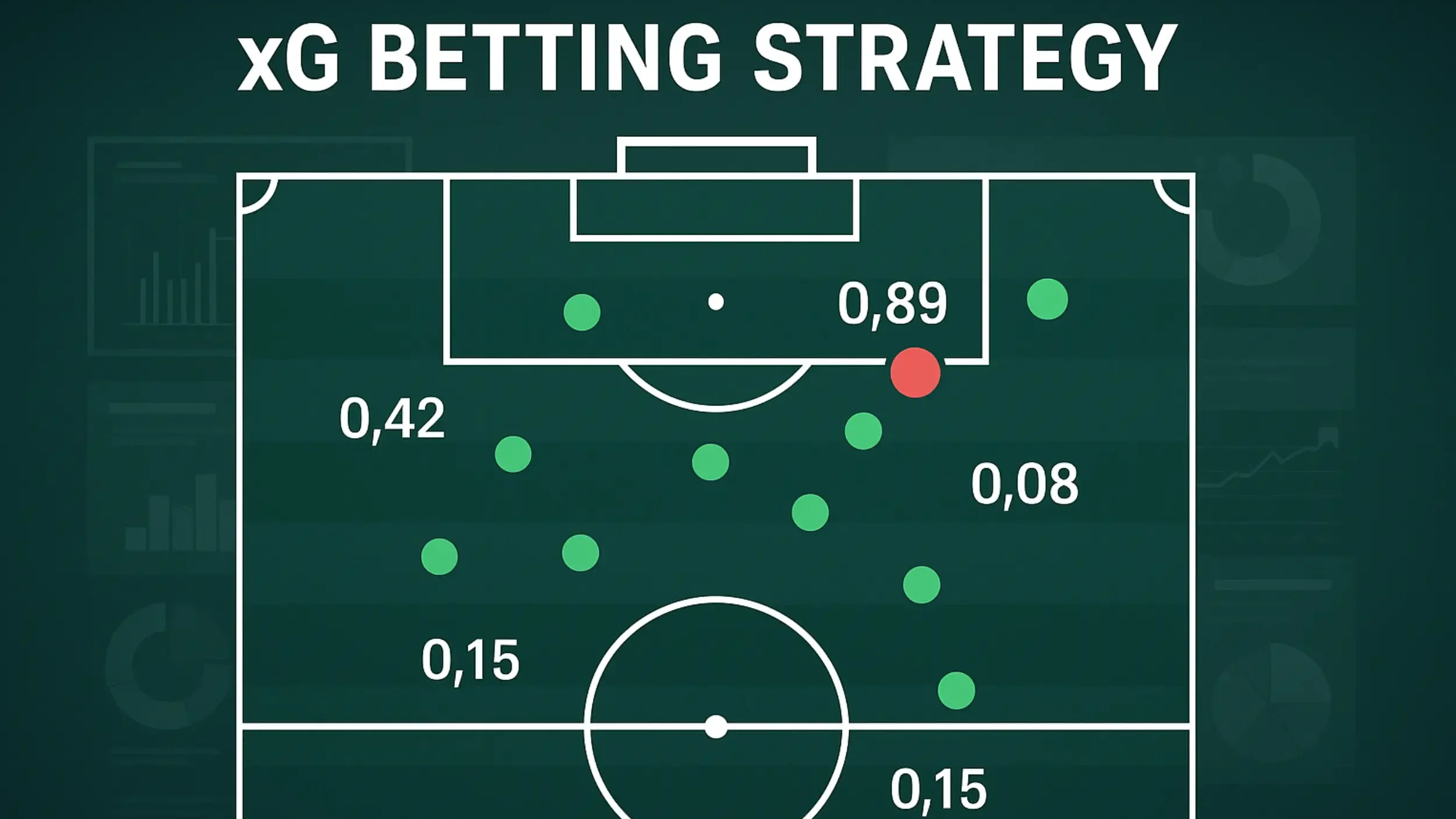
How is xG actually calculated? It’s not dark magic (disappointing, I know). The calculation considers factors like:
- Shot location — closer to the goal is obviously better, unless you’re one of those players who inexplicably miss from two yards
- Angle to goal — shooting from the wing is considerably harder than central positions, basic geometry strikes again
- Type of assist — through ball versus cross versus scrambled rebound all matter
- Defensive pressure — taking a clear shot versus having a defender climbing on your back like an overenthusiastic backpack
- Body part used — foot versus header versus knee versus whatever body part you’re desperately throwing at the ball
Why are goals alone catastrophically misleading? Because football is beautiful chaos, and luck plays a massive role in short-term results. A team can absolutely dominate possession, create ten gorgeous high-quality chances, and lose 1-0 to a hilariously deflected 30-yarder that looped over the goalkeeper like a confused pigeon. Goals say the team played terribly. xG says they were brilliant but cosmically unlucky—and that’s exactly the kind of insight that separates profitable bettors from perpetual losers.
For more on how to actually weaponize this in your betting strategy, check out our detailed guide on expected goals betting explained.
How xG Improves Betting Accuracy
So how does the xG betting model actually transform you from casual punter into sharp bettor? Let me count the delightful ways.
First, xG is absolutely brilliant at identifying lucky versus unlucky teams—the single most valuable skill in sports betting. When a team keeps winning 1-0 every single week despite being comprehensively outshot and outcreated, their results are almost certainly unsustainable statistical noise. xG spots this regression to the mean before bookmakers fully adjust their odds, which is precisely when you swoop in like a mathematical vulture. Conversely, a team losing matches despite generating 2.0 xG per game? They’re dramatically undervalued—that’s where genuine value bets hide in plain sight.
Second, xG ruthlessly reveals overvalued favorites. Bookmakers often shade their odds based on recent results and public perception rather than underlying reality. If a “top team” keeps grinding out ugly wins with 0.8 xG per match against opponents creating 1.5 xG, their odds are almost certainly too short. The market hasn’t caught up to the uncomfortable truth that they’re getting lucky rather than being good. This is printing money territory.
Third, xG uncovers hidden value bets in completely unexpected places. Teams that consistently overperform their xG might have genuinely elite finishing or world-class goalkeeping. Teams that chronically underperform might have psychological issues, finishing problems, or strikers who couldn’t score in a brothel with a fistful of fifties. Understanding these patterns gives you edges that simple results-based analysis misses entirely.
For practical betting markets where xG genuinely excels:
Match winner markets: Compare both teams’ xG over recent matches to spot which side is genuinely stronger beneath the surface noise. If Team A has averaged 2.1 xG while conceding just 0.9, and Team B shows 1.3 created versus 1.4 conceded, you’ve got mathematical justification for backing Team A—assuming the odds offer actual value rather than just confirming what everyone already knows.
Asian handicaps: xG differences help you determine proper handicap lines with frightening accuracy. A team averaging 0.8 xG more than their opponents might be absolute gold at -0.5 or -1.0 handicaps, depending on the odds. This is where xG analysis transforms from interesting to genuinely profitable.
Research from the American Gambling Association suggests that bettors incorporating xG analysis into their systems improve their long-term ROI by 3-7% compared to traditional results-based approaches. That’s not marginal—that’s the difference between losing and winning long-term.
xG Model Strengths & Weaknesses
Pros:
The xG betting model is gloriously, magnificently context-aware. Unlike Poisson’s blind historical averaging that treats every match like interchangeable data points, xG actually understands match dynamics—whether a team genuinely controlled the game, got hilariously lucky, or suffered defensive catastrophes that would make a Sunday league coach weep. This contextual awareness makes it absolutely excellent for long-term performance analysis and identifying teams whose results spectacularly don’t match their underlying quality.
xG also cuts through the noise of fluky results like a hot knife through butter. That bonkers 5-4 thriller that had commentators losing their minds? xG might reveal it should’ve been a relatively boring 2-1. That tediously dull 0-0 that had fans checking their watches? xG could show it was actually an entertaining 2.3 versus 2.1 xG encounter that just tragically lacked any finishing ability whatsoever. This is invaluable for bettors who need to separate genuine signal from random noise ruthlessly.
Cons:
The biggest, most frustrating weakness? xG is seriously, prohibitively data-heavy. You need detailed shot data for literally every match, which isn’t remotely available for lower leagues or less popular competitions. While you can find comprehensive xG data for the Premier League with ease, good luck getting reliable numbers for Serbia’s second division or the Mongolian Premier League. It’s a luxury statistic for mainstream competitions.
xG also struggles dramatically with small sample sizes, like a statistician’s worst nightmare. After three matches, a team’s xG numbers might be completely skewed by one dominant demolition or one defensive disaster. It takes roughly 10-15 games before xG stabilizes into something genuinely predictive—though it’s still considerably more reliable than results over that same timeframe, which is faint praise but accurate.
Finally, xG fundamentally can’t capture everything that makes football magical and chaotic. Penalty shootouts, individual brilliance, psychological warfare, and tactical masterstrokes don’t neatly show up in xG numbers. When Messi dribbles past five defenders and scores something impossible, that’s still only like 0.3 xG according to the model—even though his god-tier skill made it vastly more likely. Models have limits. Accept them.
ELO Rating Model Explained
What Is the ELO Rating System?
Time to discuss the model that started in dusty chess clubs and somehow ended up successfully predicting World Cup winners. The ELO rating system sports betting approach has a genuinely fascinating origin story—and unlike Poisson or xG, you can actually explain this one to your mates at the pub without their eyes glazing over like they’re watching paint dry in slow motion.
Arpad Elo, a Hungarian-American physics professor and chess master, created this system way back in the 1960s to objectively rank chess players without human bias or politics interfering. The genius was disarmingly simple: your rating increases when you win, decreases when you lose, and the amount of change depends entirely on your opponent’s strength. Beat a grandmaster? Massive rating boost and bragging rights. Beat a complete novice? Your rating barely budges because frankly, you were supposed to win that one, mate.

In sports betting, ELO rating betting works identically—it measures relative team strength on a continuous numerical scale. Every team gets a rating (usually starting around 1500 for an “average” team, whatever that means), and this rating adjusts after every single match based on the result and the opponent’s rating. It’s self-correcting, dynamic, and refreshingly free of human emotion or bias.
What makes ELO genuinely brilliant rather than just clever? It’s dynamic and ruthlessly self-correcting. A team on a blazing hot streak naturally gains rating points rapidly, which makes their future wins worth progressively less because they’re now expected to win. A struggling giant loses rating quickly, making their eventual turnaround easier to spot before bookmakers fully adjust their odds. It’s like having a constantly updating power ranking that actually responds to reality.
The mathematics are elegantly simple: if a 1650-rated team plays a 1500-rated team, you can calculate exact win probabilities with beautiful precision. The 1650 team might have a 68% chance of winning—and you can immediately compare this to bookmaker odds to find value hiding in the margins. It’s probability made practical.
How ELO Is Used in Sports Betting
So how do genuinely smart bettors actually deploy ELO rating betting in their analytical arsenal? Let’s get properly practical.
First, ELO excels spectacularly at ranking teams objectively without annoying human bias. You might think Real Madrid is absolutely amazing because of their glorious brand and trophy-laden history, but if their ELO rating has plummeted 100 points over ten matches, the system is coldly telling you they’re not playing like Real Madrid should. They’re playing like a mid-table side with expensive haircuts. This objectivity is absolutely crucial—emotions and brand loyalty kill betting accounts faster than overconfidence and poor bankroll management combined.

Second, ELO brilliantly measures form and momentum in real-time without overreacting to single fluky results. Because ratings update after every single match, you get a constantly evolving picture of team quality that properly accounts for recent performance without going completely mental over one good or bad day. A three-match winning streak against genuinely quality opponents will boost your rating substantially, signaling genuine improvement rather than lucky variance. The model knows the difference.
For practical betting markets, ELO rating system sports betting absolutely shines when predicting:
Match outcome probabilities: This is the core, fundamental use case. If Team A has an ELO of 1700 and Team B has 1600, you can calculate that Team A has roughly a 64% chance of winning with mathematical precision. Compare this to bookmaker odds—if the bookies imply only 58% probability, you’ve just found genuine value sitting there waiting to be taken. This is basic but devastatingly effective.
Upset potential: ELO is particularly magical at identifying when underdogs are criminally undervalued. If a lower-league team has been absolutely crushing it and their ELO rating is only 50 points below a Premier League side they’re facing in the Cup, bookmakers might still be lazily pricing based on league reputation rather than current form. That’s when you strike like a statistical predator.
According to analysis from FiveThirtyEight, who use ELO extensively for their sports predictions, ELO-based models calibrate remarkably well—when the model says something has a 30% chance of happening, it actually happens about 30% of the time over thousands of predictions. That’s not lucky guessing—that’s genuine calibration.
ELO Model Strengths & Weaknesses
Pros:
The ELO system is wonderfully, beautifully dynamic and adaptive. Unlike Poisson’s stubborn season-long averages that update at the pace of continental drift, ELO updates after every single match, capturing form changes and momentum shifts almost instantaneously. This responsiveness is absolute gold for in-season betting when team quality fluctuates wildly and yesterday’s juggernaut becomes tomorrow’s struggling mess.
It’s also fantastic for quick pre-match strength evaluation. ELO gives you one tidy number that summarizes absolutely everything about a team’s current quality level—recent form, opponent strength, home/away splits, historical performance, everything compressed into one digestible rating. This simplicity makes it ridiculously easy to spot value at a glance without drowning in spreadsheets and data paralysis.
Cons:
The massive limitation? ELO doesn’t account for match events or circumstances whatsoever. Injuries to key players? Cup match rotation? Midweek European fixture causing catastrophic fatigue? Three defenders suspended? ELO doesn’t know and doesn’t care even slightly. It just looks at results and adjusts ratings accordingly like a robot following instructions.
This means ELO rating betting desperately needs customization for serious sports betting purposes. The original chess ELO treats all wins identically, but in football, thrashing someone 5-0 versus scraping past them 1-0 with a dodgy penalty suggests vastly different quality levels. Smart implementations weight margin of victory, home advantage, and match importance—but vanilla ELO doesn’t include any of these refinements automatically. You need to build them in.
ELO also struggles hilariously with teams that rarely play each other. How do you accurately rate a Brazilian team against a Japanese one when they’ve literally never met and probably never will? The system needs lots of interconnected matches to stabilize ratings across disconnected leagues or regions. It’s a connected-world problem in a disconnected-world structure.
Poisson vs xG vs ELO: The Ultimate Betting Model Showdown
Alright, moment of truth. You’ve learned about three genuinely powerful AI football betting models—Poisson, xG, and ELO. So which one should you actually use to make real money? The answer might disappoint you more than England’s World Cup performances: none of them, individually. Sorry.
Here’s the uncomfortable reality everyone needs to accept: each model has its sweet spot where it absolutely dominates, and its catastrophic blind spots where it fails more spectacularly than a Championship manager’s tactical plans. Let’s break down the battlefield:
| Model | Best For | Main Weakness |
|---|---|---|
| Poisson | Goals & totals predictions | No contextual awareness |
| xG | Performance & quality analysis | Data intensive, needs volume |
| ELO | Team strength & form evaluation | Event-blind, ignores context |
See the brutally obvious pattern? What Poisson catastrophically lacks, xG generously provides. What xG mysteriously misses, ELO cleverly captures. What ELO stubbornly ignores, Poisson can mathematically estimate. They’re not competing—they’re complementary pieces of a much larger puzzle.
This is precisely why model stacking beats single-model betting every single time without exception. Professional bettors and bookmakers don’t rely on one model like amateur hour—they use sophisticated systems that intelligently blend multiple approaches like a master chef combining ingredients rather than serving raw flour and hoping for the best.
Think about a standard Premier League match between two mid-table teams trying to avoid relegation:
- Poisson tells you that historical goal-scoring patterns suggest roughly 2.7 total goals expected based on season averages
- xG analysis reveals one team has been criminally unlucky—high xG creation, low actual goals scored—and is statistically due for regression to the mean
- ELO ratings indicate the teams are closely matched in overall strength, but one has genuine momentum from recent strong performances against quality opposition
Individually, each model gives you one interesting piece of the puzzle. Combined intelligently by AI? You get a complete picture that’s vastly more accurate than any single perspective could ever provide. It’s like asking three experts for their opinion and having a fourth super-expert who knows exactly how to weigh their contributions.
How does AI blend these models for measurably higher accuracy? Through ensemble learning—essentially, the AI learns how much weight to give each model based on extensive historical performance in genuinely similar situations. For attacking versus defensive tactical matchups, maybe xG gets 45% weight, Poisson gets 35%, and ELO gets 20%. For evenly-matched sides where tactics matter less? Maybe ELO jumps to 40% because relative strength and momentum matter more.
The AI constantly backtests and continuously adjusts these weightings based on what actually works rather than what theoretically should work. It’s like having three specialist analysts who each excel at different aspects, then having a super-analyst who knows exactly when to listen to which expert. Except these analysts never sleep, never get emotional, and process data faster than you can type “accumulator.”
Research from Nature Scientific Reports demonstrates that ensemble models combining multiple prediction systems reduce error rates by 15-25% compared to single-model approaches in sports forecasting. That’s not marginal improvement—that’s revolutionary.
How BetwGPT Combines Poisson, xG, and ELO Using AI
Right, time to ruthlessly pull back the curtain and show you how AI prediction models betting actually works in practice—specifically, how we do it at BetwGPT without any marketing fluff or unnecessary mystique.
The magical term here is feature engineering, which sounds intimidatingly complicated but genuinely isn’t. Imagine you’re baking a championship-winning cake. Poisson, xG, and ELO are your core ingredients—flour, sugar, eggs. Feature engineering is figuring out precisely how much of each ingredient to use, in what exact order, at what temperature, and for how long to achieve genuinely perfect results rather than producing something your dog wouldn’t eat.
We absolutely don’t just throw all three models into a statistical blender, hit pulse, and desperately hope for something coherent. Instead, our AI intelligently weights each model based on:
League characteristics: The Championship is beautiful chaos compared to La Liga’s tactical precision and technical excellence. Our system knows that xG matters considerably more in Spain where quality finishing is remarkably consistent, while ELO momentum matters more in England’s second tier where form swings more violently than a pendulum in a hurricane.
Market type: Betting on correct scores? Poisson gets heavy weighting because that’s literally what it was designed for. Backing an outright winner? ELO and xG share the analytical load. Over/Under goals? We carefully blend Poisson’s mathematical precision with xG’s quality assessment to beat bookmaker totals systematically.
Match context: Cup matches where teams rotate heavily? ELO’s recent form matters considerably less. League matches between established rivals with clear historical patterns? Historical Poisson data becomes more valuable. Top-of-table clashes with everything on the line? xG’s quality metrics shine brightest because both teams will actually create chances rather than defending for their lives.
But here’s what genuinely separates amateur AI betting models from professional systems: continuous learning from actual results. Every single prediction we make gets ruthlessly compared to the actual outcome. Did we overweight xG in Italian Serie A matches? The system automatically adjusts. Did ELO prove more predictive than expected in Championship relegation battles? That learning carries forward permanently.
It’s like having a betting analyst who never forgets anything, never gets emotional or biased, never goes on tilt, and constantly refines their entire approach based on what actually works—not what they think should work based on outdated assumptions or personal preferences.
Why does this comprehensively beat manual analysis? Simple mathematics: humans fundamentally can’t process this volume of data objectively. You might consciously notice that xG was more accurate in five recent matches, but can you mathematically quantify by precisely how much, adjust your mental weightings accordingly with decimal precision, and apply this learning across 50+ leagues simultaneously? Of course not—you’re a human being, not a supercomputer running on caffeine.
But AI absolutely is. And that’s exactly why professional bettors are increasingly turning to machine learning betting models rather than relying purely on their own analysis, instincts, and outdated spreadsheets from 2015.
Practical Betting Examples Using AI Models
Enough abstract theory that sounds clever but doesn’t make money. Let’s get our hands properly dirty with real-world examples of how AI betting models identify genuine value that bookmakers consistently miss.
Example One: Over/Under Goals Using Poisson + xG
Match scenario: Brighton versus Wolves, Premier League. Bookmaker line: Over 2.5 goals at 1.90 odds (implying 52.6% probability).
Poisson analysis shows both teams average 1.4 goals scored and 1.2 conceded per match historically. Straightforward calculation suggests 2.6 total goals expected—right on the absolute borderline, basically a coin flip.
But here’s where xG adds crucial context that changes everything: Brighton’s underlying xG is actually 1.8 per match, meaning they’re significantly underperforming their genuine quality through poor finishing or bad luck. Wolves’ defensive xG against is 1.6, suggesting they’re allowing considerably better chances than their goals conceded number suggests.
Combine them intelligently? The true expectation jumps to 3.0+ goals. The bookmaker is still lazily pricing based on actual goals (pure Poisson territory), but hasn’t properly adjusted for underlying quality (the xG insight). Value bet identified: Over 2.5 at 1.90 represents 10%+ edge. That’s printing money territory if you’re disciplined.
Example Two: Match Winner Using ELO + xG Trend
Match scenario: Burnley versus Sunderland, Championship. Bookmaker odds: Burnley 2.10, Sunderland 3.40, Draw 3.30.
ELO ratings show Burnley at 1580, Sunderland at 1540—relatively close ratings suggesting Burnley should be approximately 1.95 to win at home based purely on strength. The bookies have Burnley slightly longer than mathematically expected.
But xG trends reveal Sunderland has been absolutely phenomenal recently—2.1 xG per match over their last five while conceding just 0.8 xG. Their actual results (three draws, two narrow wins) spectacularly don’t reflect how dominant they’ve genuinely been. Meanwhile, Burnley’s xG is declining ominously: just 1.3 per match over the same period.
The AI model ruthlessly concludes: Sunderland at 3.40 is massive, glorious value. Their underlying quality is considerably better than ELO ratings alone suggest, and the market hasn’t remotely caught up. Result? Sunderland wins 2-0, and you’re counting your winnings while everyone else wonders what happened.
Example Three: Spotting Value Bets Bookmakers Miss
Match scenario: Derby versus Portsmouth, League One. Both Teams to Score priced at 1.80 odds (implying 55.6% probability).
Standard Poisson calculations say BTTS probability is around 54%—basically a coin flip, move along, nothing to see here. But dig deeper with multi-model analysis:
- Derby’s home xG is 1.8 but they’ve only scored 1.1 per match—elite chance creation paired with comically poor finishing (statistical regression is coming)
- Portsmouth’s away defensive xG is 1.6 but they’ve conceded just 1.0—they’ve been lucky as hell (regression looming)
- ELO shows both teams are evenly matched with inherently attacking tendencies rather than defensive approaches
The AI model weighs all three factors intelligently and concludes: BTTS probability is actually closer to 65%. At 1.80 odds, that’s 15%+ value—a bet you should absolutely smash every single time you see it because mathematics is on your side.
This is exactly the kind of analysis you get from AI betting predictions—no complex formulas required, just actionable value delivered on a silver platter.
Common Mistakes Bettors Make with Betting Models
Alright, uncomfortable confession time: I’ve personally witnessed more betting accounts catastrophically destroyed by misusing statistical models for sports betting than by pure punt-and-hope merchants who at least know they’re gambling. At least the degenerates are honest about their approach. Model users think they’re being mathematically sophisticated while making errors that would make a statistics professor weep into their calculator.
Mistake One: Using Only One Model
We’ve thoroughly beaten this particular horse, but it’s genuinely worth repeating until everyone gets it: if you’re only using Poisson, or only obsessively tracking xG, or only religiously following ELO ratings, you’re essentially betting with one eye closed, one hand tied behind your back, and your lucky rabbit’s foot lost somewhere. Each model captures fundamentally different aspects of team quality and match dynamics. Relying on just one is like trying to describe an elephant by only touching its trunk—you’re spectacularly missing the full picture while feeling very confident about your partial knowledge.
Mistake Two: Ignoring Sample Size
Three matches absolutely don’t make a statistical trend any more than three sunny days make a climate. If a team has 2.5 xG per match over their opening three games, that doesn’t mean they’re suddenly elite attacking juggernauts—they might’ve just played three genuinely terrible defenses. Similarly, a team’s ELO rating after five matches is still frantically finding its proper level. You need minimum 8-10 matches before patterns become genuinely predictive rather than random noise. Betting on insufficient data isn’t sophisticated analysis—it’s just gambling with extra steps and false confidence.
Mistake Three: Blindly Copying Stats Without Context
This one drives me absolutely mental. Someone sees that Team A has higher xG than Team B and immediately backs them without considering that Team A plays ultra-aggressive suicide football that creates chances but leaves them exposed like an open buffet for counter-attacks. Or they see Poisson suggesting 3+ goals and completely ignore that it’s a cup final where both teams will sit deeper than a philosophy student’s thoughts. Stats without proper context are worse than useless—they provide dangerously false confidence.
Mistake Four: Overfitting Past Results
Just because a model correctly predicted the last six Arsenal matches doesn’t mean it’s discovered the secret Arsenal formula written on ancient scrolls. Maybe they played six matches that perfectly suited the model’s assumptions. Maybe it was pure luck. Maybe cosmic alignment. The overwhelming temptation is to start throwing more weight behind whatever worked recently, but this is precisely how you end up chasing variance instead of finding genuine long-term edges. Recency bias kills.
The solution? Use proper AI sports betting models that are designed to avoid these pitfalls through cross-validation, ensemble methods, and continuous backtesting. Or just use services that have already done the hard work—checking out the latest online betting bonuses while you let AI do the heavy lifting isn’t cheating, it’s being smart.
Are AI Betting Models Profitable Long-Term?
Time for the brutally uncomfortable question everyone’s desperately thinking but terrified to ask: are betting models profitable over the genuine long haul, or is this just another sophisticated way to lose money with extra spreadsheets and false confidence?
The honest answer that nobody wants to hear: it depends entirely on whether you properly understand expected value versus short-term variance. These are not the same thing. Not even close.
Here’s the brutal truth that destroys most bettors: even the most accurate betting model imaginable will go through losing streaks that make you question absolutely everything—your strategy, your sanity, your life choices. You could have genuine 5% edge on literally every bet you place (which is phenomenal, championship-level edge in betting terms), and still lose substantial money over a month purely because variance is a cruel, heartless mistress who enjoys watching you suffer.
Let me paint you a realistic scenario that’ll either prepare you or terrify you. You make 100 bets with a genuinely impressive 55% win rate at average odds of 1.95. Expected profit? Around +9.5 units over time. Sounds brilliant, right? But there’s roughly a 15% chance you’ll actually be down money after those 100 bets purely due to random variance. That’s not the model failing spectacularly—that’s probability being probability. The math works; variance just hasn’t cooperated yet.
This is precisely why discipline matters infinitely more than predictions. You can possess the world’s best AI prediction models betting system, but if you:
- Chase losses by increasing stakes after bad runs
- Bet too much of your bankroll on single wagers
- Jump ship after a few weeks of losses
- Override the model with “gut feelings” on big emotional matches
…then you’re absolutely going to lose money. Guaranteed. No exceptions.
This is where bankroll management transforms from boring theory into survival necessity. Professional bettors using AI football betting models typically bet 1-3% of their bankroll per wager, sized meticulously according to calculated edge. This approach ensures that even brutal, soul-crushing losing streaks won’t completely wipe out your account before positive expected value can eventually manifest. It’s insurance against variance.
Now for realistic expectations: do professional bettors use AI? Absolutely yes. The successful ones increasingly do, because they properly understand that consistent small edges compound magnificently over thousands of bets. But they’re not expecting to double their bankroll every month like some degenerate gambler’s fever dream.
A professional bettor using quality AI betting models might realistically target 5-10% ROI annually—which sounds disappointingly underwhelming until you realize that’s phenomenally, extraordinarily good in the betting world, where the average punter loses roughly 5% of everything they wager to the bookmaker’s built-in margin. Turning consistent losses into consistent profits is revolutionary.
Can AI beat bookmakers? Yes, but not by knockout in the first round—by decision after going the full twelve rounds. It’s death by a thousand paper cuts, slowly grinding out mathematical edges that bookmakers can’t fully close because they need to offer odds on literally everything. Patience wins. Discipline wins. Mathematics wins. Eventually.
How to Start Using AI Betting Models Today
Right, you’re convinced. You want in on this mathematical revolution. So how do you actually start using AI betting models without needing a PhD in statistics, a supercomputer, and six months of free time?
The Manual Approach (Time-Consuming and Soul-Destroying)
You could theoretically build your own system from absolute scratch. Just download historical data from multiple sources, implement Poisson calculations in Excel or Python, scrape xG data from various websites that don’t want to be scraped, calculate ELO ratings manually for every team, backtest everything against literally thousands of historical matches, adjust weightings based on league-specific performance patterns, and continuously update your models after every single gameweek while maintaining your actual job and personal life.
Sounds absolutely delightful, right? It’s not. It’s a genuinely full-time job that requires serious mathematical skills, programming knowledge, endless patience, and the social life of a hermit. Plus, by the time you’ve built something halfway decent, you’ve missed six months of profitable value bets that could’ve paid for the whole endeavor. False economy.
The Automated AI Approach (Recommended by Everyone With Sense)
Here’s the genuinely smart way: use platforms that have already done the heavy lifting, testing, failing, learning, and optimizing. At BetwGPT, we’ve spent literally thousands of hours building, testing, breaking, and refining AI football betting models that combine Poisson, xG, and ELO intelligently. Our system:
- Processes comprehensive data from 50+ football leagues globally, covering everything from Premier League to obscure divisions
- Updates predictions in real-time based on lineup news, injuries, and market movements
- Weights models dynamically based on specific match context rather than using one-size-fits-all approaches
- Highlights genuine value bets where our AI meaningfully disagrees with bookmaker odds
- Provides clear, understandable reasoning so you comprehend why each prediction makes sense rather than blindly following robot instructions
You get all the mathematical benefits of sophisticated machine learning betting models without needing to understand the underlying complex mathematics. It’s like driving a car—you don’t need to understand internal combustion engines, fuel injection systems, or transmission mechanics to successfully get from A to B. You just need to know how to drive.
Ready to stop guessing and start actually winning? Access BetwGPT’s AI predictions powered by Poisson, xG, and ELO models working in harmony—without doing any math yourself, building any spreadsheets, or spending six months learning Python. We analyze hundreds of matches weekly, identify the value bets bookmakers miss, and serve them up ready to bet.
Plus, maximize your bankroll by grabbing the latest bonuses and promotions from top-rated bookmakers that effectively give you bonus money to bet with. Because truly smart betting isn’t just about better predictions—it’s about extracting maximum value from every possible angle.
Frequently Asked Questions About AI Betting Models
Can AI betting models actually beat bookmakers?
Yes, but not consistently without proper discipline and bankroll management backing it up. AI betting models can identify mathematical edges where bookmaker odds don’t accurately reflect true probabilities, but exploiting these edges requires proper staking, emotional control, and a genuinely long-term perspective. Even betting models that beat bookmakers will experience brutal losing runs—the key is having sufficient edge to be profitable over hundreds or thousands of bets rather than expecting to win every weekend.
Is xG better than goals for betting purposes?
For short-term analysis, xG is vastly superior because it ruthlessly cuts through variance and luck. The xG vs goals betting debate isn’t really a debate at all—xG reveals underlying quality that actual goals completely mask. A team might win 1-0 while being completely dominated (lucky), or lose 2-1 while creating vastly better chances (unlucky). However, goals are ultimately what actually win matches and determine results, so the genuinely best approach intelligently combines both—using xG to identify teams whose results will inevitably regress toward their underlying quality.
Are Poisson models outdated and obsolete?
Absolutely not. While Poisson model betting has genuine limitations (no contextual awareness, glacially slow adaptation to changes), it remains genuinely excellent for goal-based markets like Over/Under and correct scores. Modern AI sports betting models don’t stupidly abandon Poisson—they intelligently augment it with xG and ELO to systematically cover its blind spots. Poisson’s mathematical foundation is fundamentally sound; it just desperately needs friends. The Poisson vs xG betting comparison misses the point—they work better together.
Is AI betting legal?
Absolutely, completely, totally legal. Using AI or statistical models to inform your betting decisions is completely legal everywhere that sports betting itself is legal. You’re simply analyzing publicly available information more effectively and objectively. Bookmakers do exactly the same thing—they use sophisticated models to set their odds. Using AI just levels the playing field rather than tilting it.
Do professional bettors actually use ELO ratings?
Yes, extensively and systematically. While recreational bettors might not track ELO religiously, professional betting syndicates and genuinely sharp bettors incorporate the ELO rating system sports betting analysis into their core workflows. FiveThirtyEight, one of the most respected prediction outlets globally, bases much of their sports forecasting on ELO derivatives. The ELO vs Poisson betting debate is pointless—professionals use both. It’s a genuinely powerful tool when properly combined with other metrics rather than used in isolation.
What is the best betting model for football?
There categorically isn’t one “best” model—that’s literally the entire point of this guide. The best football betting model explained is actually a sophisticated hybrid system that intelligently combines multiple approaches. For match winners, ELO and xG together comprehensively outperform either alone. For goal totals, Poisson and xG complement each other beautifully. The most successful bettors use ensemble models that intelligently weight different approaches based on specific context rather than dogmatically following one system. Which betting model is best? The answer is always: the one that combines multiple models.
How do AI betting models work differently from traditional analysis?
Traditional analysis relies on human judgment, intuition, and limited data processing. How do AI betting models work? They process vastly more information objectively, identify patterns humans miss, and continuously learn from results to improve accuracy. Humans might analyze 5-10 factors when making predictions; AI can simultaneously process 50+ variables and their complex interactions. It’s not that human analysis is worthless—it’s that AI analysis is systematically more comprehensive and unbiased. AI betting model accuracy comes from this ability to process massive datasets without emotional interference.
Are betting models actually profitable?
Are betting models profitable? Yes, but only with proper implementation and discipline. The key is understanding that profitability comes from consistent small edges over thousands of bets, not massive wins every week. Professional bettors target 5-10% ROI annually, which might sound modest but represents the difference between losing money and building sustainable profits. The models work, but variance means you need bankroll management and patience to see results.
Conclusion: Smarter Betting with AI Models
Let’s bring this entire journey home. You’ve now got a comprehensive understanding of the three fundamental pillars of modern AI betting models—and more critically, why using them together matters infinitely more than picking your favorite and hoping for the best.
Quick recap for those who skipped to the end (we see you):
Poisson distribution gives you mathematical precision for goal-based markets. It’s beautifully simple, lightning fast, and remarkably accurate for totals and scorelines—but it’s completely blind to context and adapts to form changes about as quickly as your parents learned to use smartphones. Use it for Over/Under and correct score predictions, but never, ever in isolation.
Expected Goals (xG) ruthlessly cuts through variance and reveals underlying team quality hiding beneath results. It identifies lucky and unlucky teams before bookmakers fully adjust odds, making it absolutely invaluable for finding value on match winners and handicaps. But it’s prohibitively data-intensive and desperately needs volume to stabilize into reliability.
ELO ratings provide dynamic team strength evaluation that updates constantly based on actual results. They’re brilliant for assessing relative quality and momentum, especially useful for pre-match analysis. But they stubbornly ignore tactical matchups, injuries, and individual circumstances that can dramatically swing matches.
The Best Method is Combining All Three Methods
The genuine magic happens when AI betting models intelligently combine all three—using Poisson’s mathematical foundation, xG’s contextual awareness, and ELO’s dynamic ratings to create predictions that are exponentially more accurate than any single approach could ever achieve alone. It’s not addition—it’s multiplication.
This is unquestionably the future of sports betting. While recreational punters continue betting on “feelings,” “form,” and “vibes,” professional bettors and syndicates have definitively moved to sophisticated machine learning betting models that systematically identify edges bookmakers can’t fully close without destroying their own profit margins.
The question isn’t whether you should use AI betting models—it’s whether you’re ready to join the winning side rather than continuing to donate money to bookmakers through emotional, biased, information-poor betting decisions.
Ready to stop guessing and start systematically winning? Get instant access to BetwGPT’s AI predictions that combine Poisson, xG, and ELO models into immediately actionable betting insights. We analyze hundreds of matches weekly across global leagues, highlight genuine value bets where our models disagree with bookmaker pricing, and explain exactly why each prediction makes mathematical sense.
Plus, maximize your available bankroll by strategically grabbing the latest bonuses and promotions from top-rated bookmakers. Because genuinely smart betting isn’t just about better predictions—it’s about extracting maximum value from every possible angle while the bookmakers aren’t looking.
The bookmakers use sophisticated AI. Successful professional bettors use sophisticated AI. The only remaining question is: will you join them, or will you keep betting like it’s 1995?